CU Racing Team: On the Fast Track
How do grassroots programs like Buffs Racing compete in the gilded world of Formula SAE?
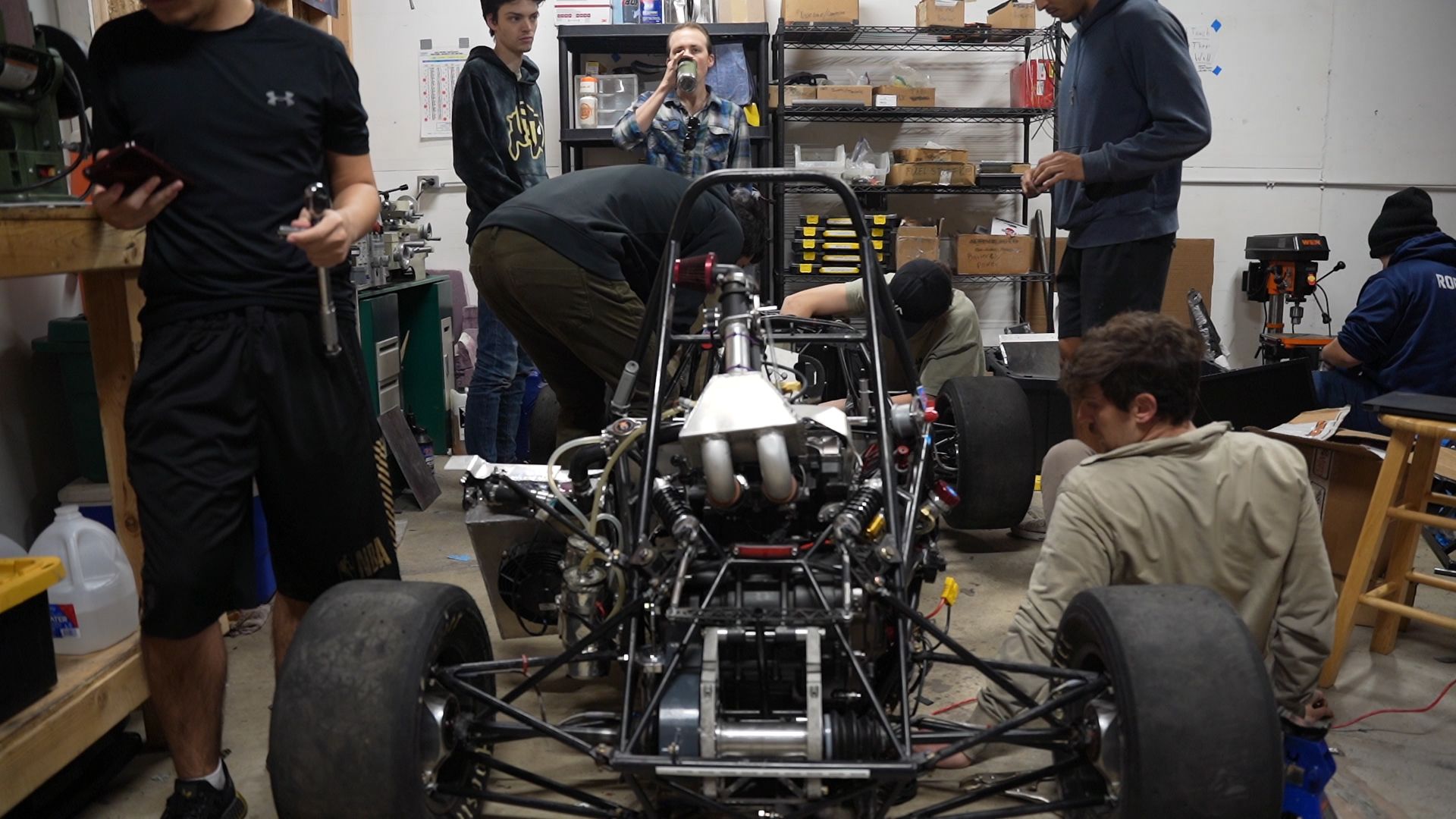

I was losing my bearings the very first time I visited the Buffs Racing shop. Tucked away behind a church in suburban Longmont lies a humble garage full of passion and big dreamers. The shop is little more than a corrugated steel shed, but it has been the home of CU Boulder’s club racing team since 2016. Major, established car companies like McLaren have become well known for the glistening, white-tiled, spotless factories every one of their vehicles is produced in. Even Nissan assembles sport car engines in a “hermetically sealed laboratory.” What does that mean? I’m not totally sure. But I can assume the lab is not outfitted with wooden workbenches and a mobile space heater. This, to a point, is the difference between the top-performing Formula SAE teams and our fierce CU home team.
We love underdog stories… David and Goliath, Rudy, and even Susan Boyle belting out opera tunes. It’s a tale as old as time, especially in the world of motorsports. Car racing has always been a locale of playboy-millionaire one-upmanship where private jets and blacked-out helicopters are just part of the game. Where, then, do a few dedicated college students crowded around a lathe in a gusty garage in Colorado fit in? How do these scrappy, young minds plan to compete with top-level, international programs? In a time where new technological discoveries seem to be made every day, Buffs Racing is pushing hard to keep up with the Jones’s.
Each year, the Society of American Engineers (SAE) hosts a collegiate racing championship called Formula SAE that challenges students to design, build, and race a competitive car. The championship focusses heavily on the design process, and it is possible for teams to finish well even if they have issues on the track. Formula SAE is made to introduce, train, and expose the next generation of engineers to the automotive and aerospace fields of engineering.
During their construction and testing phase, I spoke with Josh Hansen (Vice President), Sam Morehead (Lead Powertrain Technician), and other team members about what it’s like to compete against some of the most well-funded programs in the country.
Sam Morehead, a graduate student of chemistry, found Buffs Racing in the early days of the pandemic. Sam came into the project with significant knowledge and expertise of chemistry but had to keep an open mind as he realized there is so much more at play when building a top-tier race car. Machining solid metal parts, welding, and days’ worth of calculations and computer simulations were all tools Sam had to learn to use as the team’s Lead Powertrain Engineer.
“A lot of people on the team do come at it from a love of cars and from watching Formula for years, but I feel like I am a little bit of the exception there,” Sam explains. “I am a chemistry major in my undergrad, so I started from the molecular [level] … Combustion is one of the more interesting reactions and so I backed it up from there, which is kind of an unconventional way to get into racing.”
During setup of the team’s new engine, Sam was peering into the pixels on his laptop behind a plastic folding table. He was using live software to see real-time data on engine performance and efficiency, and make adjustments as necessary. It’s not the glamorous, professional setup we may see on television, but every team member does what they can to contribute to the team’s success.
Josh Hansen, a mechanical engineering student joined the team as a freshman in 2020. Now he has landed in the role of Vice President of both Buffs Racing’s Formula SAE and ChampCar Endurance divisions.
“I don’t know what I would be doing if I wasn’t a part of racing. I’ve always had an interest in cars. And, you know, any cars, airplanes, helicopters, that’s what I’m interested in,” Hansen said. “So it was really great, freshman year, to be able to take that and say ‘Wow, I’m going to start designing a race car.'”
In addition to his role as VP, Josh is also the team’s Chassis Lead. This means he is heavily involved in the initial design and construction of the frame and suspension components of the car. Beyond that, however, I saw both Josh and Sam assisting with tasks outside their respective areas of expertise. After all, the car is like the human body in the sense that everything is connected, one faulty link in the chain could cause problems to arise in a totally unexpected area.
Buffs Racing’s ambition is obvious. Members collaborate to find and solve problems, then test their solutions to utilize the most effective option. The building process is strenuous, and each step requires time and resources to accomplish. The car improves in iterations as the Buffs must choose which tasks need attention first. One day while I was visiting the shop. Josh and several other team members were working on completing an entirely new braking system for the car. They needed to make a system that was strong, reliable, and capable of locking up all four wheels under full pressure. The process involved some trial and error, but after perfecting the bends in the tiny, steel hardlines they had an efficient, powerful braking system that was a tremendous upgrade from last year’s car.

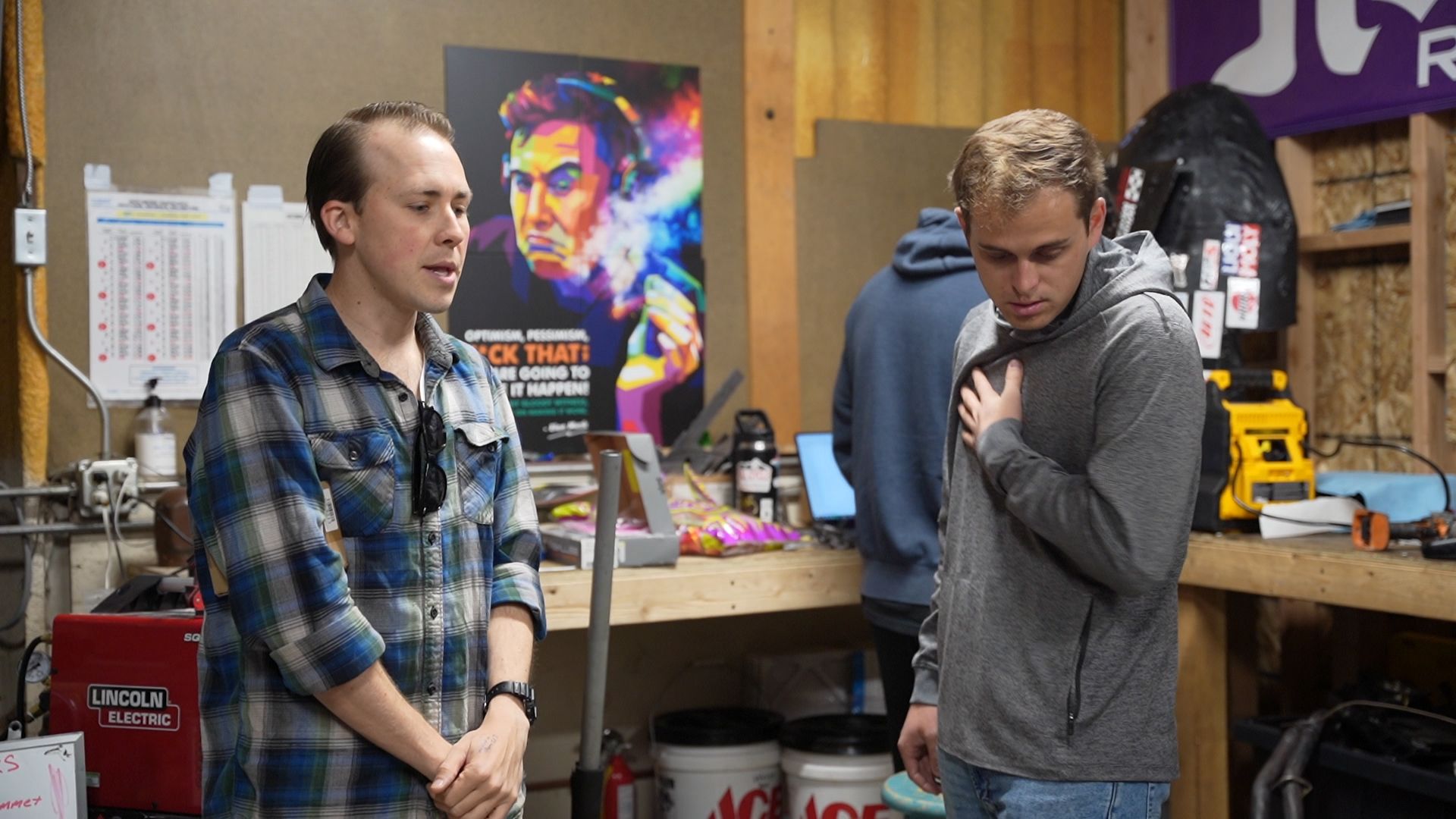
Top-placing programs in the country have access to plenty of resources and usually have budgets in the six-figure range, some of the European teams are lucky enough to have budgets going up to seven figures. Not only does a larger budget grant the team access to high-end equipment like CNC machines and carbon fiber technology, but it can also make the process less demanding on team members.
“Working on a team with half the budget of a lot of the other teams, you HAVE to be creative. We have to make a lot of parts in house, even little stuff that other teams can buy … we’re just sitting on the lathe making our own,” Hansen describes.
This year, the team’s biggest goal is to make it to competition with a fully functional car. The Buffs had a few hang ups in last year’s competition that prevented them from running the car in the time-trail races, even though they scored well in the design portion of the competition. The team is working with what they have; trying to keep concepts simple and utilize ideas and components that have been proven to work well in the past. That is not to say, however, that they are not looking forward with optimism.
As the consumer car space is moving quickly towards electric power, EV motorsports are getting more recognition than ever before. Electric power is ideal for Formula SAE, too. Teams can get an immense amount of power and torque from such a compact package, that, in the pursuit of the quickest lap time, is impossible to ignore.
“As an engine guy it does give me some feelings, there’s no more explosions happening inside the engine! It’s a sad goodbye, in a sense. But if I back it out to the thing I liked in the first place, chemistry, there is plenty of chemistry in the battery. But it is the future of where a lot of commercial vehicles are going,” Sam said.
Like many engineering and design projects, the change is going to take time. It is unlikely either Sam or Josh will see Buffs Racing compete with an electrically powered race car, but it is something they are already dedicating time to. It will be a considerable transition for the team to make, but it will allow them to jump much higher in the ranks and results of the FSAE competition.
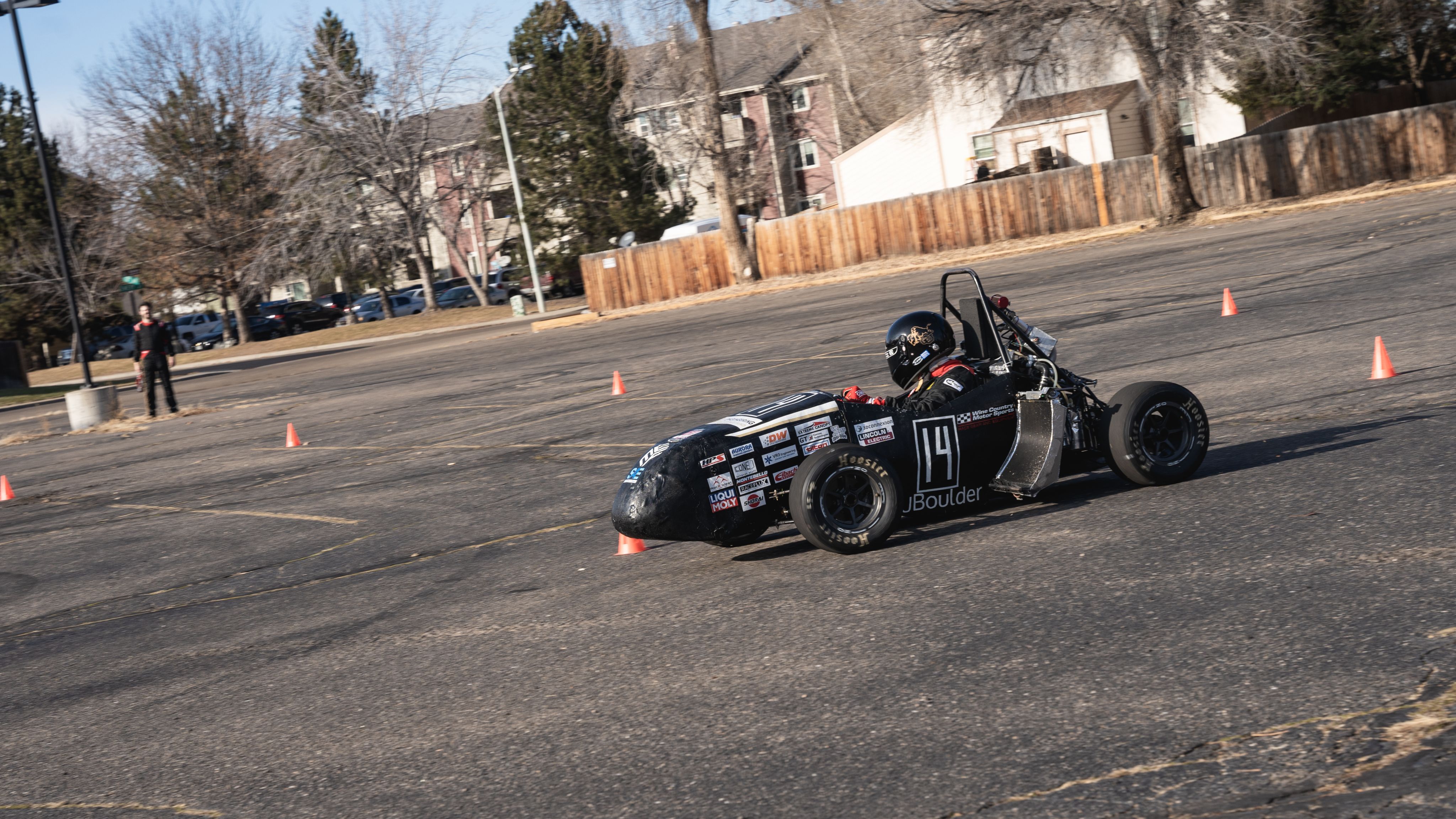
Josh Hansen (driver) put the car through a number of dynamic tests to be sure the team was progressing on a path that would set them up well for the competition next year. Like many other aspects of the project, the team has to work with what is available to them; it's not always glamorous but it sure is effective. Credit: Carter Bell CU News Corps, December 4, 2022.
Josh Hansen (driver) put the car through a number of dynamic tests to be sure the team was progressing on a path that would set them up well for the competition next year. Like many other aspects of the project, the team has to work with what is available to them; it's not always glamorous but it sure is effective. Credit: Carter Bell CU News Corps, December 4, 2022.
The biggest challenge with the transition to EV will be the monetary aspect. The characteristics and dynamics of EV race cars are different than traditional, internal combustion-powered race cars. Everything from the tires and brakes to the body and aerodynamics will need to be reconsidered, and it will require an immense amount of support.
“Building EV’s is a whole different ball game; you can’t just buy batteries and expect everything to work,” Hansen explains. “You have to manufacture everything in house. I think we’re doing a really good job with the money that we have, and I’m hoping we can get a little bit more so we can do some more creative things.”
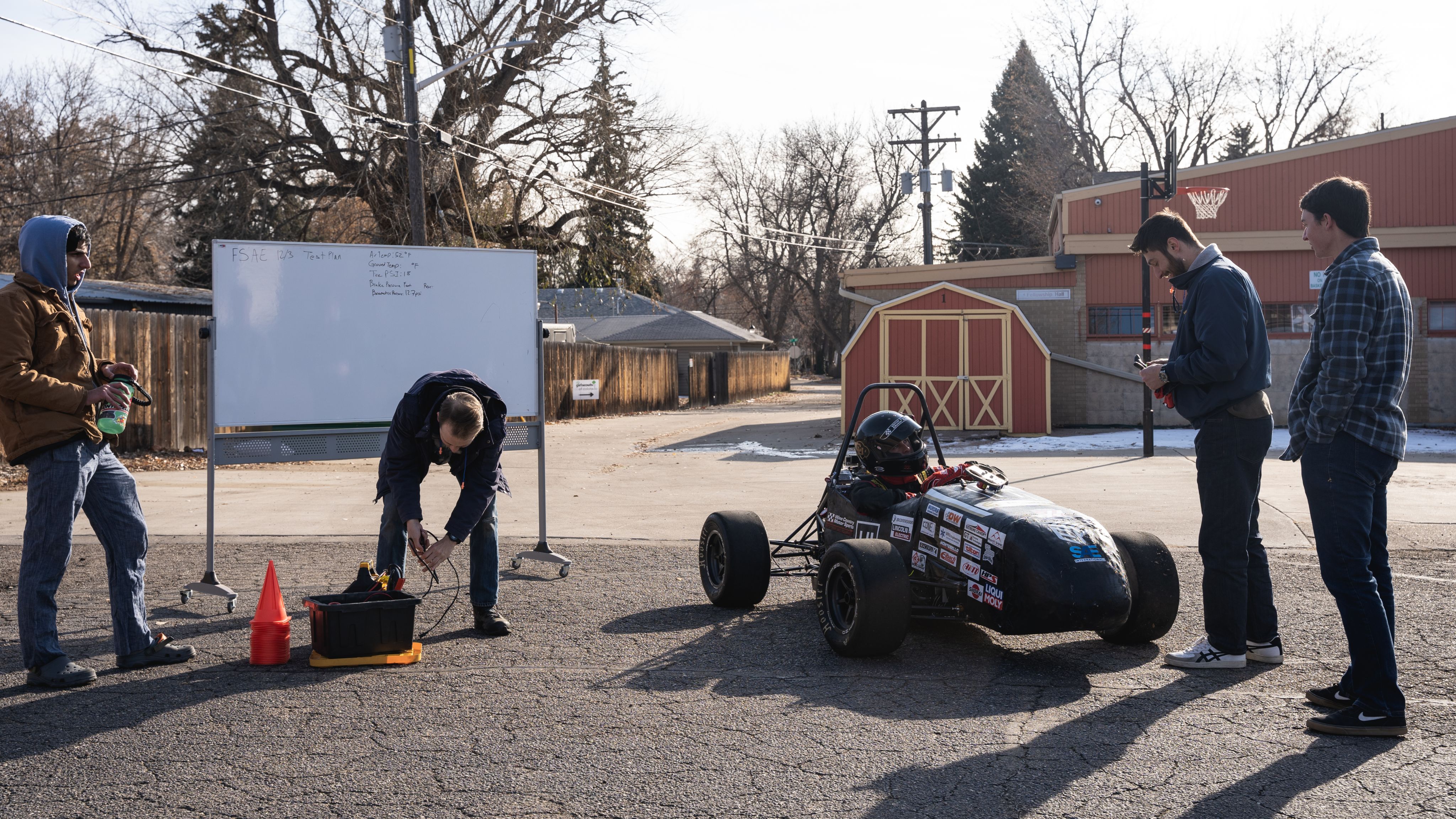
Sam Morehead makes sure the rest of the team is prepared and standing-by as Josh Hansen warms up the race car for a testing day at the shop in early December. Credit: Carter Bell CU News Corps.
Sam Morehead makes sure the rest of the team is prepared and standing-by as Josh Hansen warms up the race car for a testing day at the shop in early December. Credit: Carter Bell CU News Corps.
Making connections and establishing a position in the university’s community is equally as important for the team as building the cars. University events, collaboration with other clubs and teams, and being active on social media are ways Buffs Racing is spreading the word about what they do. The passion and effort the team shares is genuine, and they are always looking to grow what they have started.
“We’re always trying to put ourselves out there with the university, going to university events and showing people what we do,” Josh said. “Getting out into public, showing people the high quality of what we do… I think it’s pretty impressive and I think a lot of other people do, too.”
At this point in the year, the team is still very early on in the building process. The competition will be held in May at Michigan International Speedway, but that gives the Buffs plenty of time to work towards their goals. On a cold winter’s day of testing the team was able to prove the functionality of their new braking system as well as the fresh engine calibrations the car will receive this year. There is still lots of work to keep Josh, Sam, and the rest of the team busy until September. But with some hard work and creative thinking, Buffs Racing will definitely be coming up in May.
Check out the team on Instagram @buffsracing and go to buffsracing.com to join the effort!

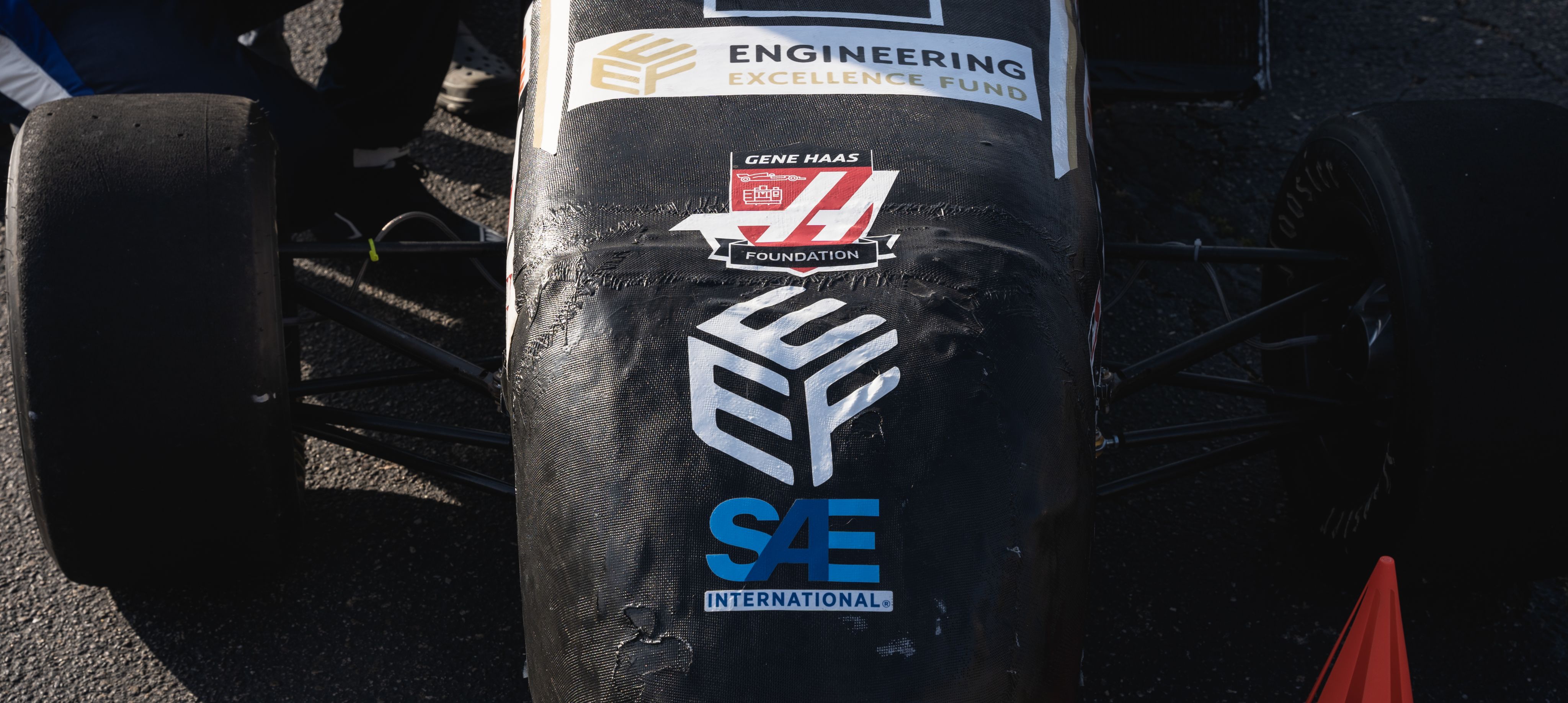
Adorned with sponsor stickers, the car itself is a representation of the support Buffs Racing already has behind them. In the future, the exterior of the car will likely look much different than it does today. Credit: Carter Bell CU News Corps, December 4, 2022.
Adorned with sponsor stickers, the car itself is a representation of the support Buffs Racing already has behind them. In the future, the exterior of the car will likely look much different than it does today. Credit: Carter Bell CU News Corps, December 4, 2022.
 Built with Shorthand